
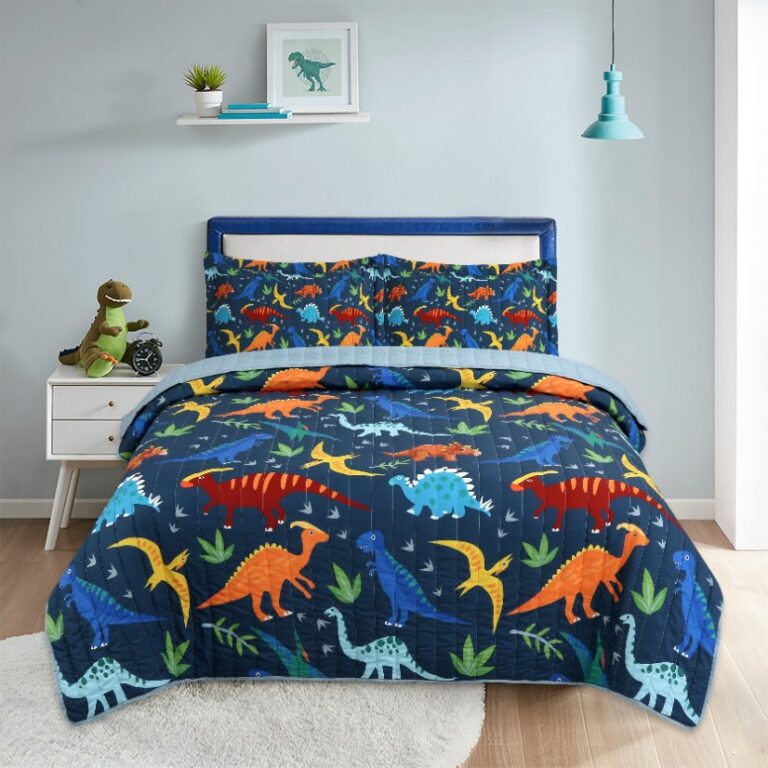
A bedding set RFQ should contain an itemized list of the pieces the buyer expects the supplier to quote. Identify the catalogue reference, name each proposed component, and ask the supplier to confirm its quantity and inclusion in the commercial offer. Keep furniture, decorative objects and anything shown only for styling outside the assumed package. A set name and a bedroom photograph can identify an inquiry, but the supplier’s confirmed component list defines the proposed supply.
Keep catalogue wording attached to one item
Huawuque Digital lists an A11 Kids Dinosaur 3-Piece Quilt Bedding Set. Use that complete reference and its actual product URL when requesting clarification. The catalogue title is a useful identifier, especially when a supplier displays several children’s designs. It does not remove the need to ask what each piece is and which version the supplier is including in the response.
Keep the item code separate from the buyer’s requested contents. A buyer might want the catalogue configuration, a quilt alone or another proposed combination. Those are different inquiry scopes, and availability should be confirmed by the supplier. Do not transfer the contents of another model to this request merely because both appear under a similar bedding category. The supplier should be able to answer against one clearly named order line.
Use the room scene to ask questions, not count supply
The selected dinosaur scene shows a bedspread and matching-looking objects at the head of the bed, alongside room furnishings. It provides a visual reference for the intended appearance. It does not establish whether a pictured object represents a cover, an inserted filling, a decorative accessory or a supplied item. Name the component you want quoted instead of relying on the position of an object in the scene.
The distinction matters even within one supplier’s catalogue. The separate A01 floral product page describes a single quilt despite a styled image with matching-looking pillows. That example is a reason to confirm each item’s own scope. It is not evidence that the dinosaur reference has the same contents, nor a reason to assume that every pictured pillow-like object is included with its filling.
Ask for a component-by-component answer
Make the supplier’s response easy to check. Give each proposed component a line and leave uncertain information marked pending. The following table is a request format, not a declaration of the contents currently available from Huawuque Digital. It can be adapted to the supplier’s actual reply without inventing an assortment.
Component field | Buyer should identify | Supplier should confirm
Main bed covering | Exact catalogue model and requested version | Applicable supplied item
Matching cover | Which pictured object the request means | Whether the proposed component is offered
Insert or filling | Any separately requested internal item | Included, excluded or separately quoted
Quantity | Requested count for each named component | Actual quoted count and unit
Presentation | Required relationship between components | Packaging arrangement for the proposed offer
Excluded props | Objects shown only in the room scene | Items outside the confirmed supply
Separate sample contents from a bulk offer
A supplier may provide a sample to illustrate a design or a component. Ask whether the sample package represents the proposed order configuration or only selected items. Record a missing component explicitly rather than interpreting its absence as a change to the commercial offer. The sample label, catalogue reference and component list should explain their relationship to one another.
When the buyer receives the sample, record which identified pieces arrived and ask about any difference from the requested sample scope. Keep a substitution separate until the supplier has explained it. This is a purchasing identity check. It does not establish safety, suitability for a particular child, material composition, care performance or compliance with any destination-market requirement. Those matters require their own applicable supplier information and assessment.
Carry the same list into the purchase confirmation
Before confirming an order, compare the supplier’s component list with the buyer’s requested scope. If the quotation uses the word set, ask it to point to the applicable list or configuration reference. Keep quantities, units and separately quoted additions visible. A total price without an agreed scope does not allow a purchasing team to know whether two offers cover the same supplied items.
For an international purchasing team, preserve the original model code in translated messages and avoid replacing specific component names with a broad term such as bedding accessories. Keep the supplier’s confirmed wording beside any translation. If a component changes, identify the affected order line and request an updated confirmation. Minimum orders, delivery dates and stock availability should be obtained from the current offer rather than inferred from a product scene.
• Name the requested component before asking whether it is included.
• Separate covers, inserts and styling objects in the inquiry.
• Keep sample scope and the proposed order configuration distinguishable.
Frequently asked questions
Does a three-piece title define the contents by itself?
It identifies the catalogue reference, but the buyer should still request the names and quantities of the offered pieces. Confirm the actual version and component list in the supplier’s response instead of assigning a meaning to each pictured object.
Should decorative room objects appear on the order list?
Only if the buyer specifically requests them and the supplier confirms that they are offered. A styled product image can contain furniture, ornaments or other accessories that are outside the commercial supply.
Does a pillow-like object include an insert?
Do not assume that from the photograph. Ask the supplier to distinguish the cover, any insert and any separately quoted item. Keep the answer attached to the exact model and offer under discussion.
What if the sample package contains fewer items?
Ask whether it was intended as a selected-component sample or a representation of the full proposed configuration. Record the answer and reconcile any difference before using the sample as the purchasing approval reference.
Product and contact references
Catalogue reference: confirm matching item: https://hwqdigital.com/product/a11-kids-dinosaur-3-piece-quilt-bedding-set/
Related catalogue reference: https://hwqdigital.com/product/a01-blossom-fortune-digital-printed-quilt/
Contact Huawuque Digital: https://hwqdigital.com/contact/
Huawuque Digital blog: https://hwqdigital.com/blog/